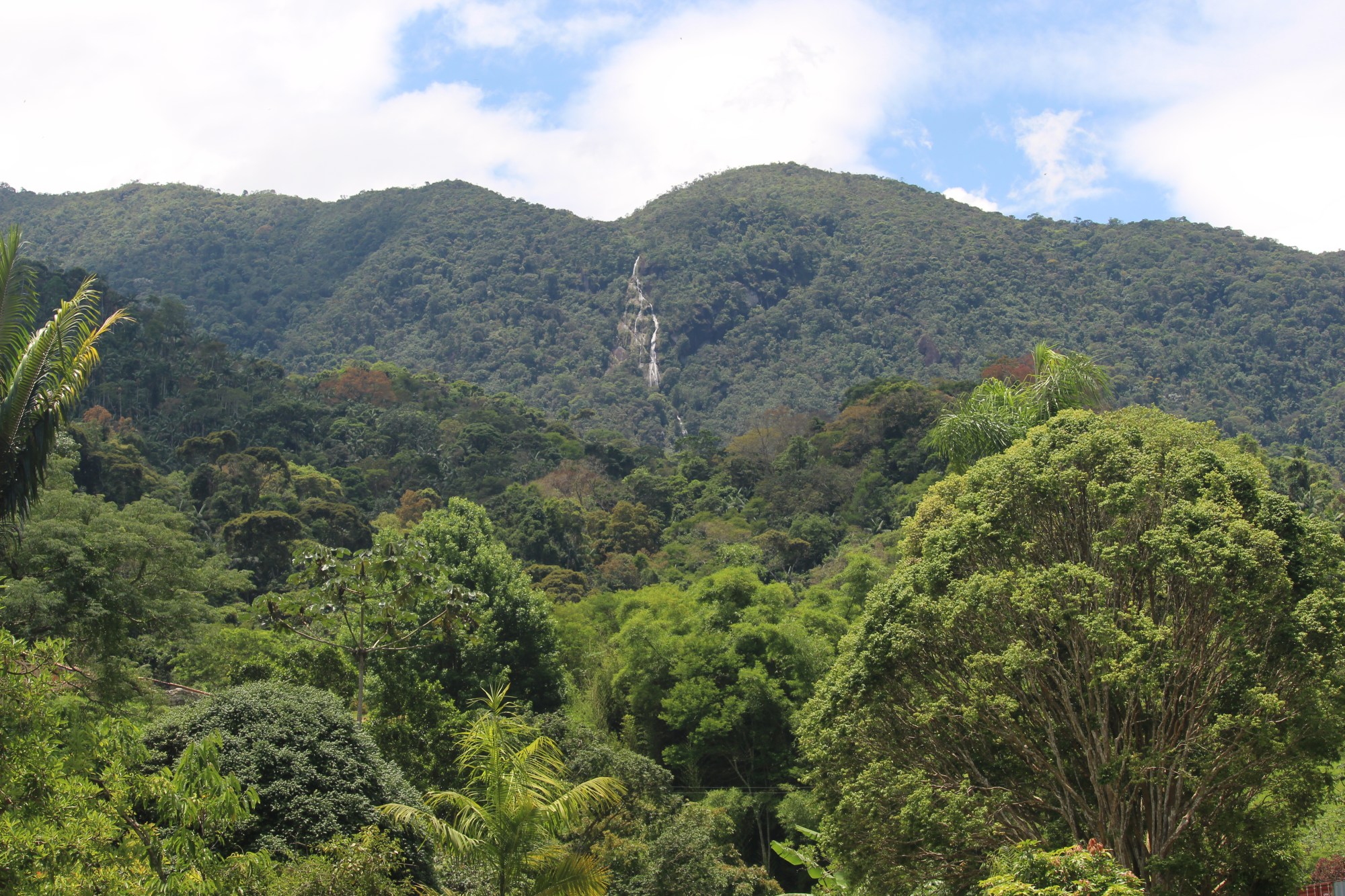
I spent 10 days in an Ecovillage in the Atlantic forest. I found this project in Workaway (Thank you, Virginie, for the tip 😊)
The Ecovillage (1 permanent resident = the owner) is located 7km away from the next town – so it is very isolated and calm. On the way to the town, you only pass by a handful of farms. The ecovillage is also a camping site and hostel, which just opened its gates for visitors. Most of the temporary residents are volunteers/”workawayers”. During my stay, I was one day all by myself while on the other days, I enjoyed the company of two other workawayers – one guy from Rio de Janeiro and a woman from South Korea.
For the ones who do not know workaway – it is a platform for travellers – searching new experiences – and businesses or similar needing some help. The deal is usually, that the workawayer gets a bed in the dorm and some food while helping the owner with his business/project.
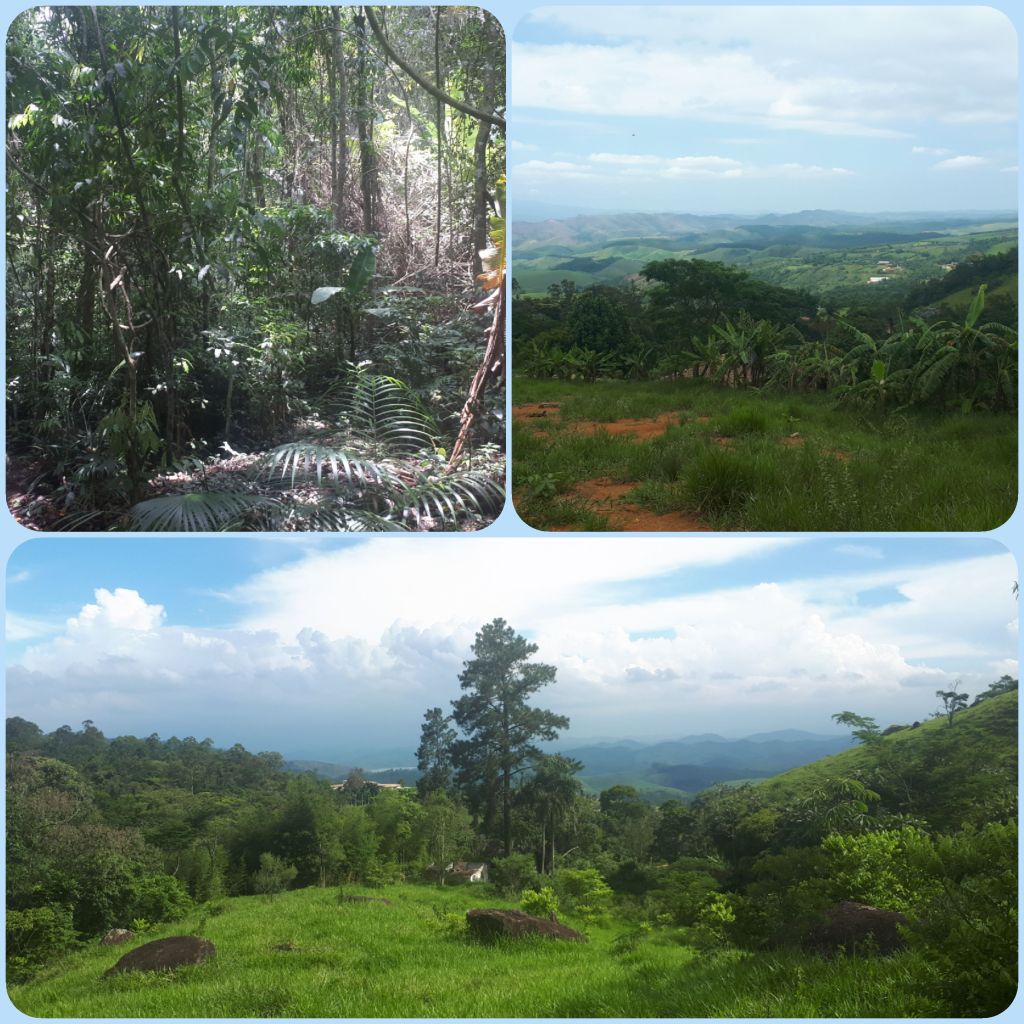
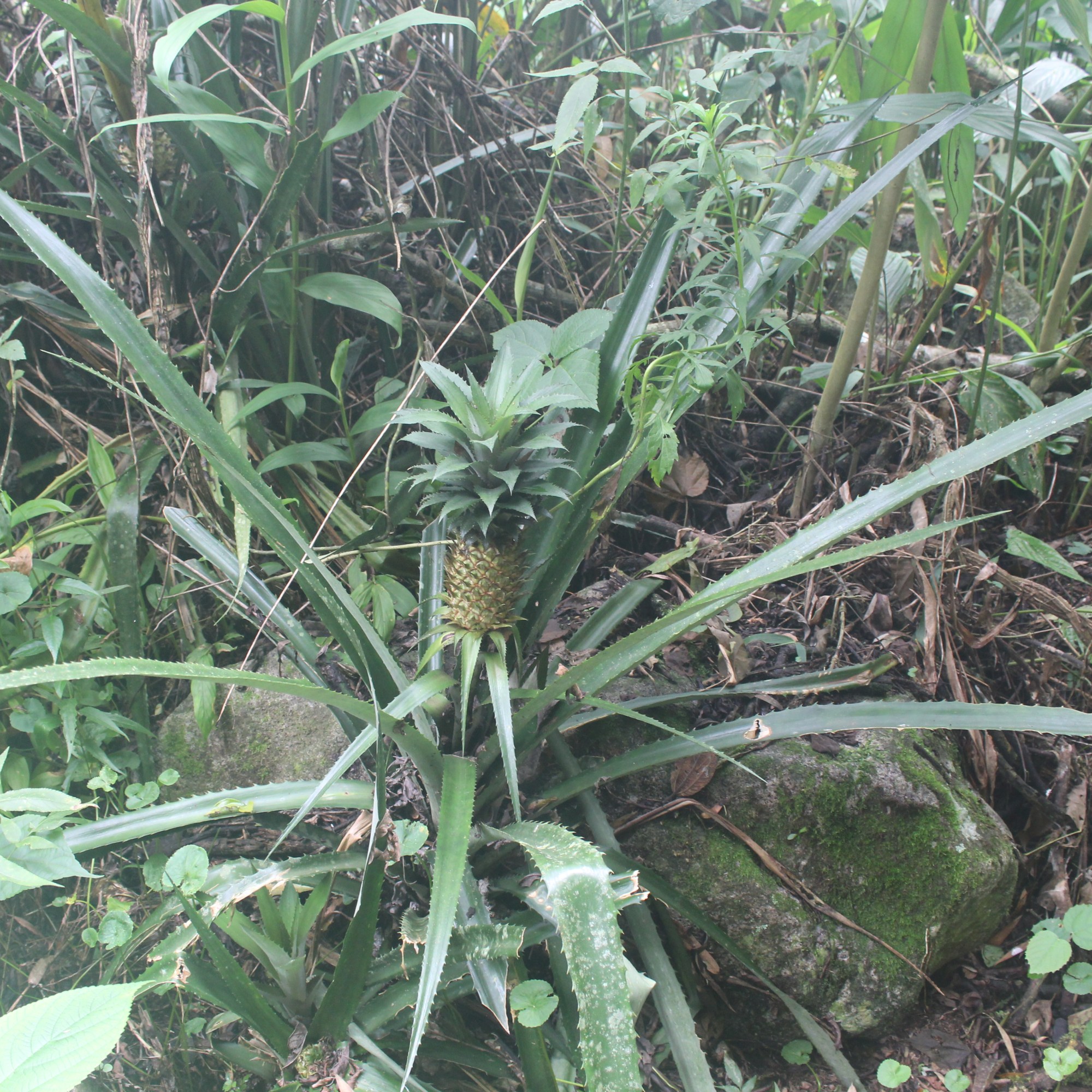
The ecovillage is all about ecological farming and as well deforestation of the Atlantic rain forest. During my stay we were unfortunately too busy with the farm work given that we were only three people ( or on one day just me), so I could not improve my (horrible) carbon footprint by planting trees and I guess the five pineapples I planted do not have a huge impact 😛
My responsibilities during the stay were quite diverse. I love dogs, so it came naturally to me, that I took care of the six dogs – i.e. feeding, cuddling, cleaning and giving medicines to the dogs. Usually, the dogs living in the Ecovillage are allowed to run freely around at night – protecting the village from wild animals. Unfortunately, the two dog girls were attacked by a wild pig before I arrived, so I had to take care of their wounds, but they will be fine. During the day the dogs stay in their cannel (spacious) to allow the chickens, ducks and geese to run around in the garden without being attacked by the dogs.
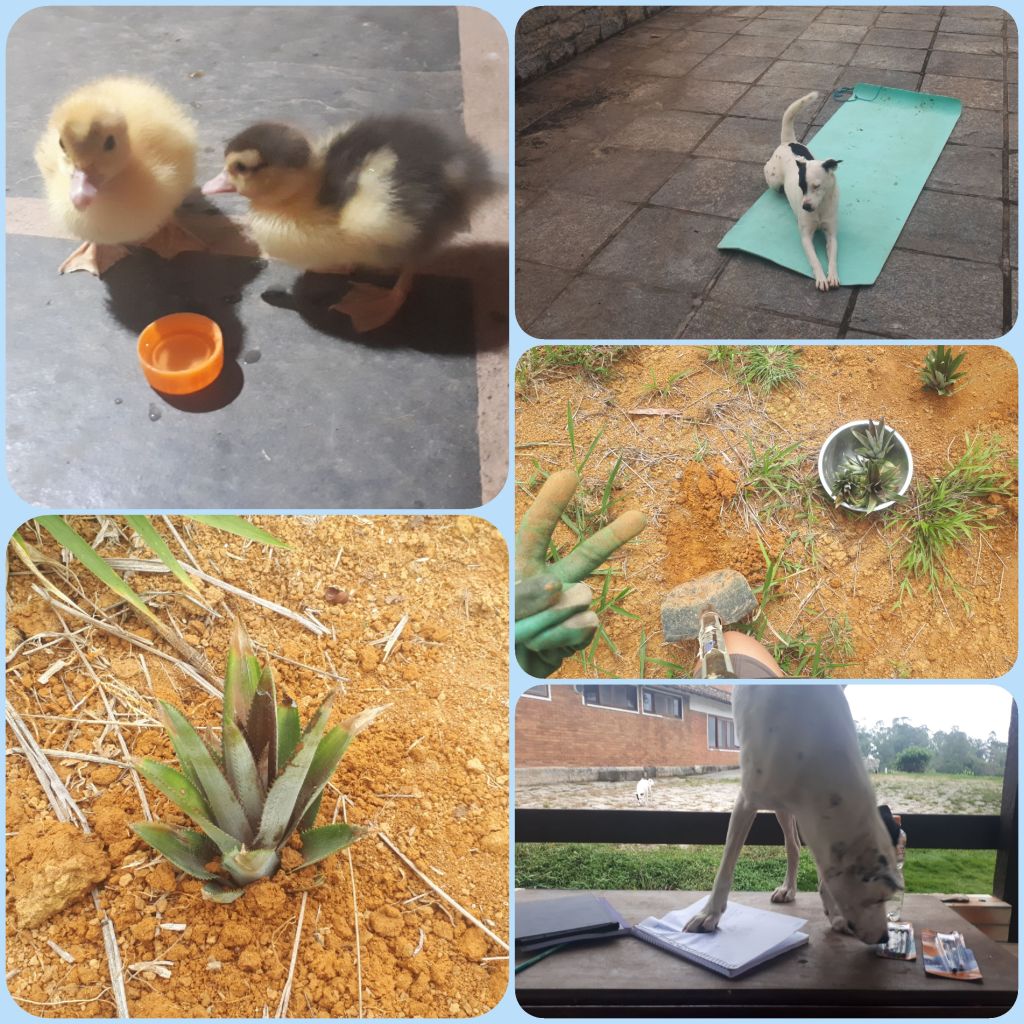
On my first day, I took two baby ducks into my custody. Nature can be cruel and other ducks might attack the babies out of jealousy and therefore, the babies always get isolated. So I had to feed them, ensure that they drink. I also let them run around in the kitchen to ensure they get some exercise. Luckily, the other workawayer informed me in time, that three toads are living in the kitchen, which loves eating baby ducks – so my ducks survived during my stay and they grow so quickly. The kitchen area has a roof, but no walls – only a fence. So many bugs and other stuff come in, but the toads eat them and keep the kitchen clean. Just don’t let the baby ducks get close to them.
I also planted
pineapples, all kinds of vegetables,
harvested bananas, chuchus (Chayote), kale, papayas etc. The most
exhausting work, however, was to manure the plants. We cut lots of grass during
my stay and as some part of the land is not very fertile, we distributed the
grass around the plants as “natural fertilizer” hoping that it keeps
the plant moist, the root hidden from the sun and of course releasing nutrients
etc. into the earth. The farmland is directly next to the rain forest, it rains
every day and still, the red earth is so super dry that it is difficult to grow
food. I guess that the land was super fertile before the forest was cut down
from one of the previous owners 
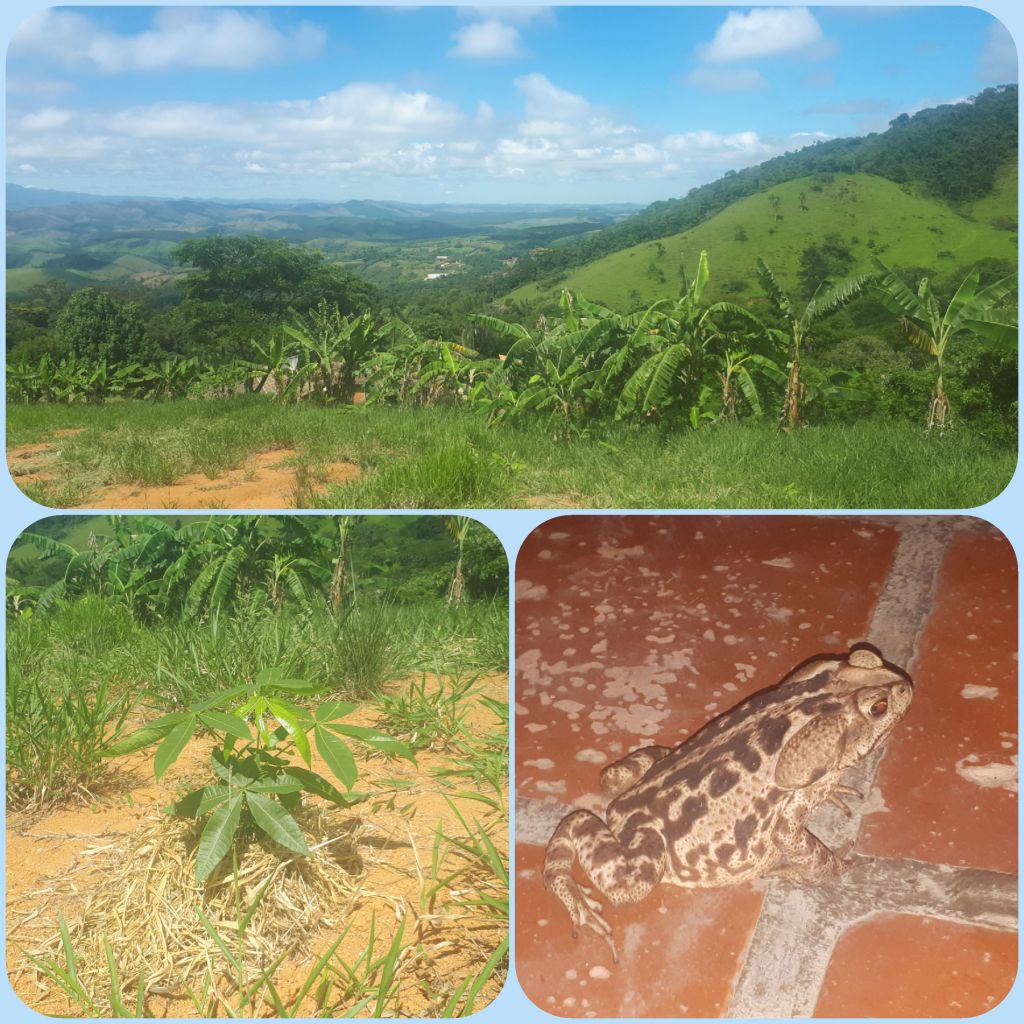
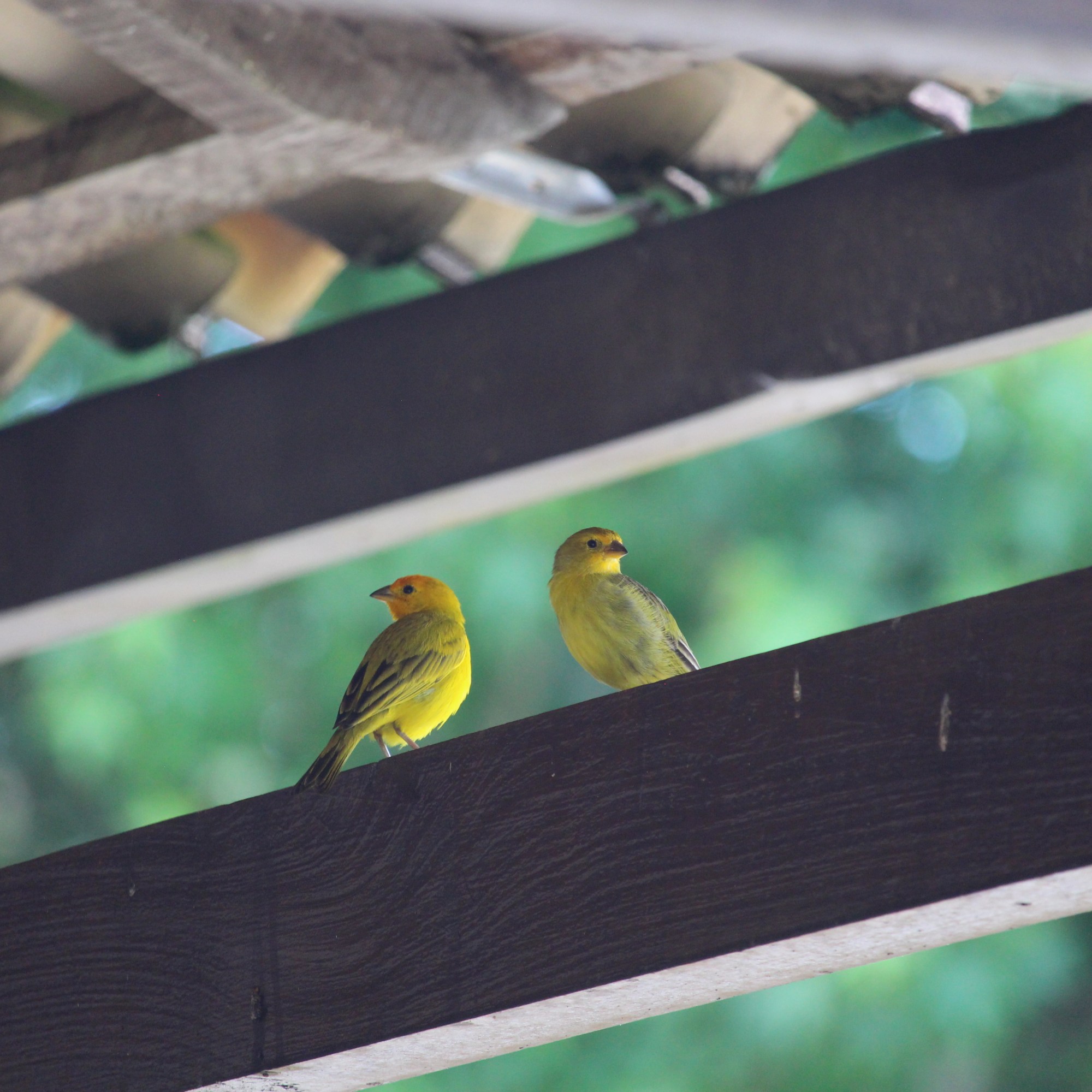
While working in the mornings, we spent the afternoons relaxing in the hammocks, taking a bath in the natural swimming pool or taking a walk in the rain forest. The forest is always good for surprises – there are so many waterfalls and natural pools – suddenly you stand in a bamboo forest or you find large wild banana trees and pineapples and many colourful bromeliads. From time to time you also have some butterflies or hummingbirds swirling around your head – and of course the birds – these colours – oh my gosh. They are also some parrots flying around. Nature is just beautiful.
On top of learning a lot about food, farming and fruits/vegetables, I also learned more tricks about cooking both from the owner and the South Korean volunteer. We mainly eat, what we could harvest (or what was already in the freezer). The food was soo amazingly good – I think I gained some kilos though working hard. My new favourite veggie is Chuchu and I started to like Papaya. Before I ate Papaya for the first time in Ecuador, the person I was with told me, that Papayas tastes like vomit and since then I just could not eat Papaya…– now this is gone –



Have you ever eaten Pancakes with a Papaya-Creme or a Banana-Papaya-Avocado-Smoothie – hmm so delicious. One day we also made Dumplings and I finally learned how to make very good fried rice (sounds easy, but the key is in the details).
The owner also likes to eat raw vegetables – conserved in Vinegar, Olive Oil and all kinds of spices. I have to try doing this at home – it is so delicious and you can keep it for up to six months at a cool place and just take some whenever you need a snack or a side dish – Onions with Beetroot or cabbage. I finally like cabbage. Glady, the South Korean volunteer is a chef and she had the best ideas what to make out of the vegetables etc. we had on hand. When we took the walk through the forest, we spontaneously picked some Bamboo, we later put in the soup for dinner. If I had been responsible for cooking, I guess we would have eaten fried rice with Chuchu for dinner and lunch and eggs and fruits for breakfast. I am somehow really in the mood, to get a nice vegetable garden and grow at least some of my food by myself – but I guess that this would require too much time and given my talent with plants ( even cactuses don´t survive) not sure, whether that is a long-lasting idea or just a temporary dream 😛
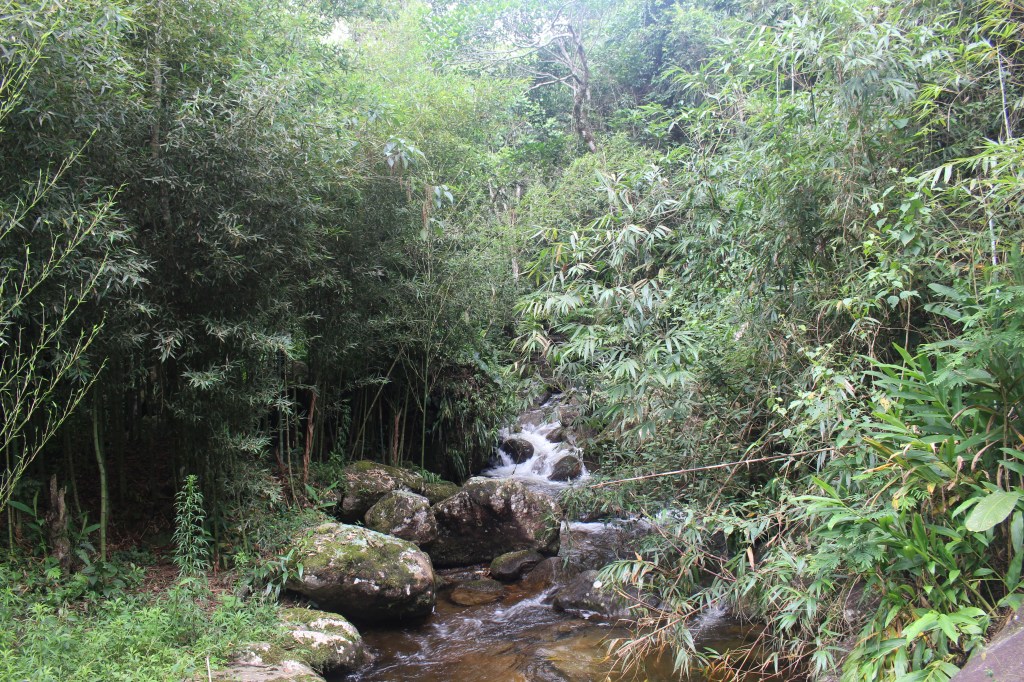
Arriving back in São Paulo was, of course, a little shock – instead of hearing just animals and waterfalls, I am back in one of the biggest cities in the world – with horrible traffic, smog but an awesome nightlife 😛
 Wanderlust